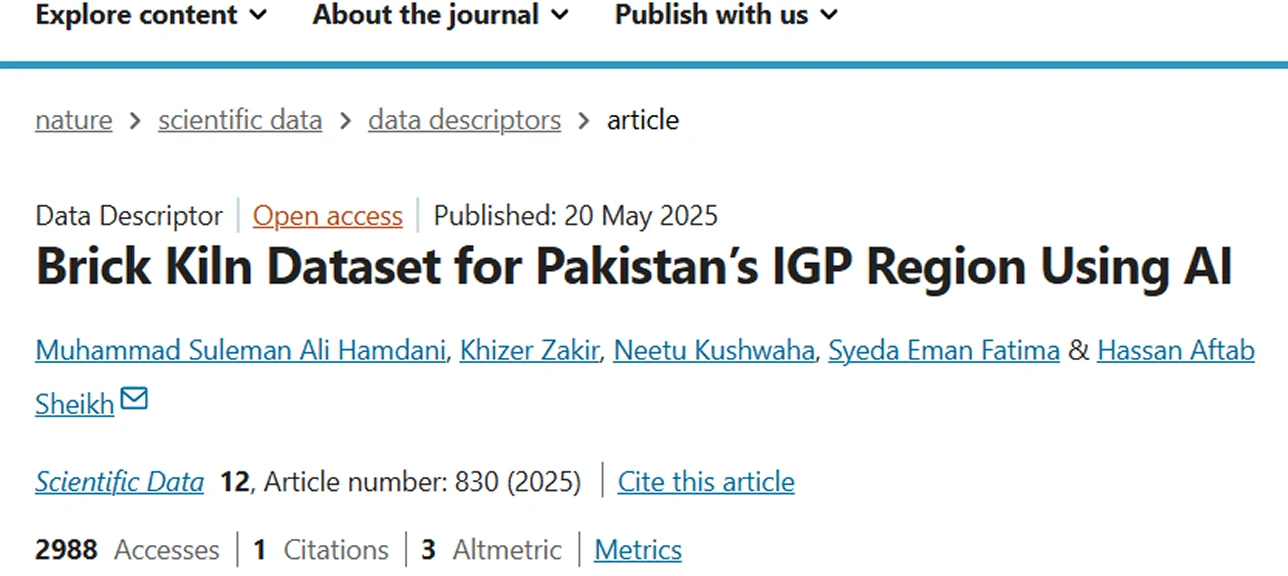
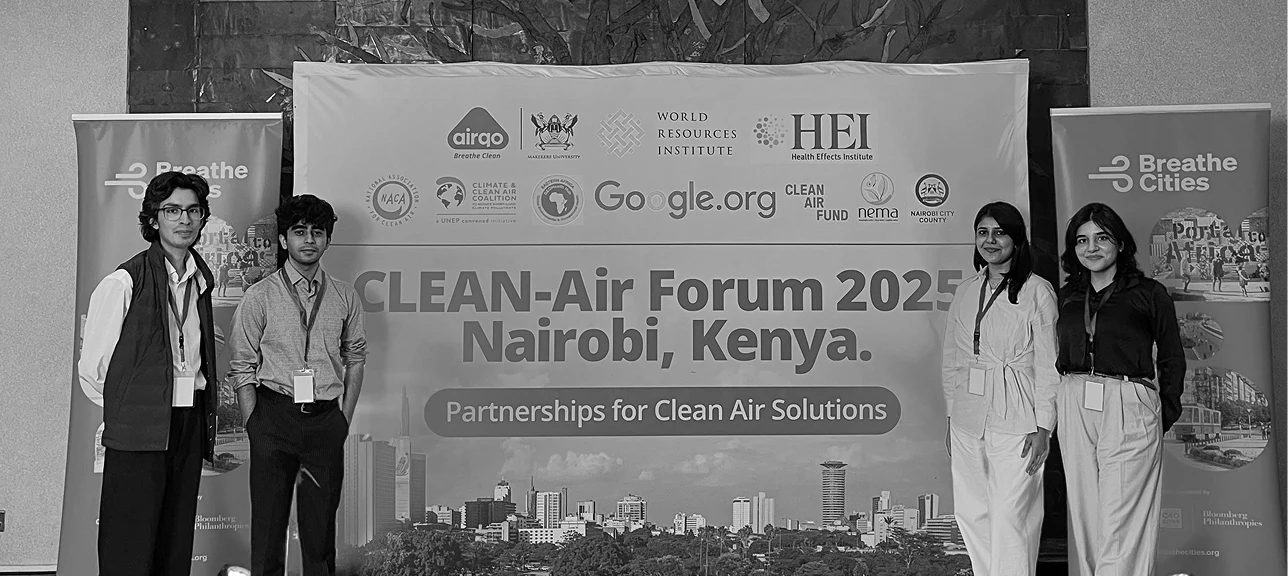
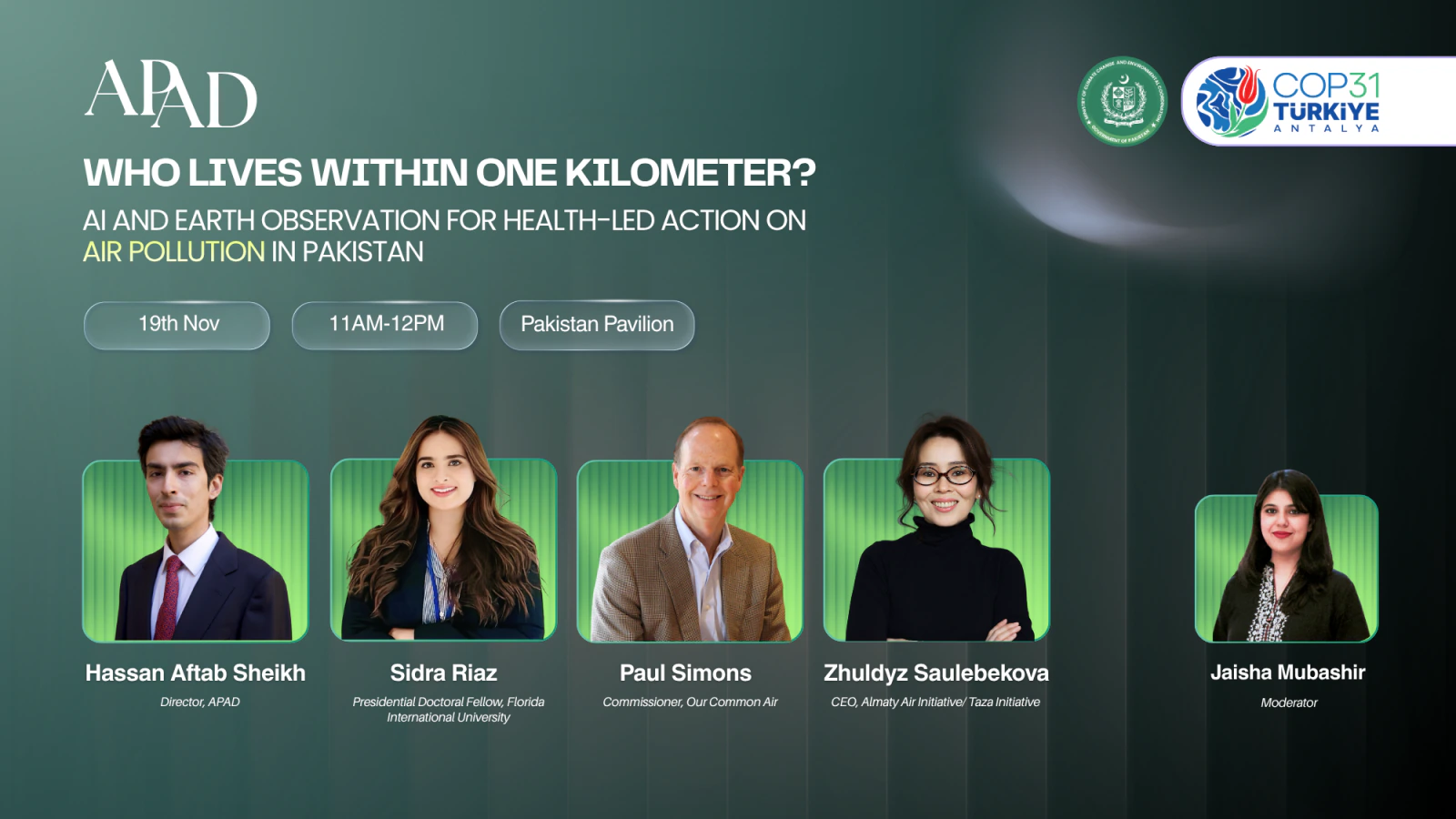
Last week, APAD hosted a session at the Pakistan pavilion at COP31 titled “Who lives within one kilometer? AI and Earth Observation for Health-led Action on Air Pollution in Pakistan”
Air pollution is one of the largest environmental drivers of ill human health, and its burden falls hardest on the people who live closest to the sources. Leveraging remote sensing and AI, we can now map and scale formal and informal sources of air pollution at asset-level. The question our session went in with was how this evidence can become working levers: targeted enforcement, conditions in procurement and subsidy, emissions trading that reflects proximity to vulnerable people, and concessional finance that rewards operators who move away from high-risk sites.
Dr Hassan Aftab, director APAD, opened the session by reiterating the cause for extreme concern in the air pollution sector. He reminded the room of just how many goods and services around the world have major air pollution costs that directly impact human health. He then compared the current PM2.5 population-weighted exposure to the opportunity that exists for gain in life expectancy and touched on the long-standing issue of funding not reaching those suffering the most.
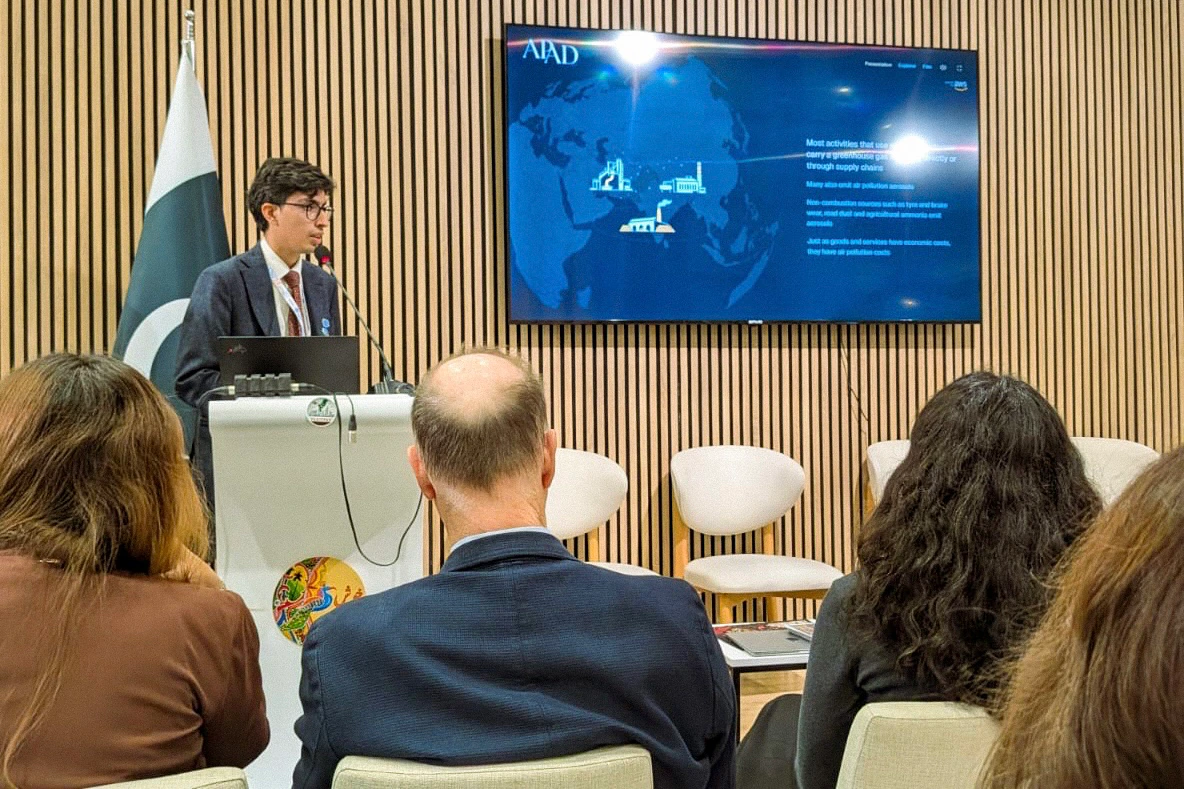
Suleman Hamdani, AI lead at APAD, then presented APAD’s inventory and proximity analysis. Presenting APAD’s open-source asset detection and the methodology behind it, he shared APAD’s brick kiln mapping in Pakistan’s IGP region in detail. He then shared all the other sectors and assets APAD has been able to map over time. According to our analysis, around 25 million people in Pakistan were estimated to live within a 1-kilometer radius of an asset and 91 million within a 3-kilometer radius.
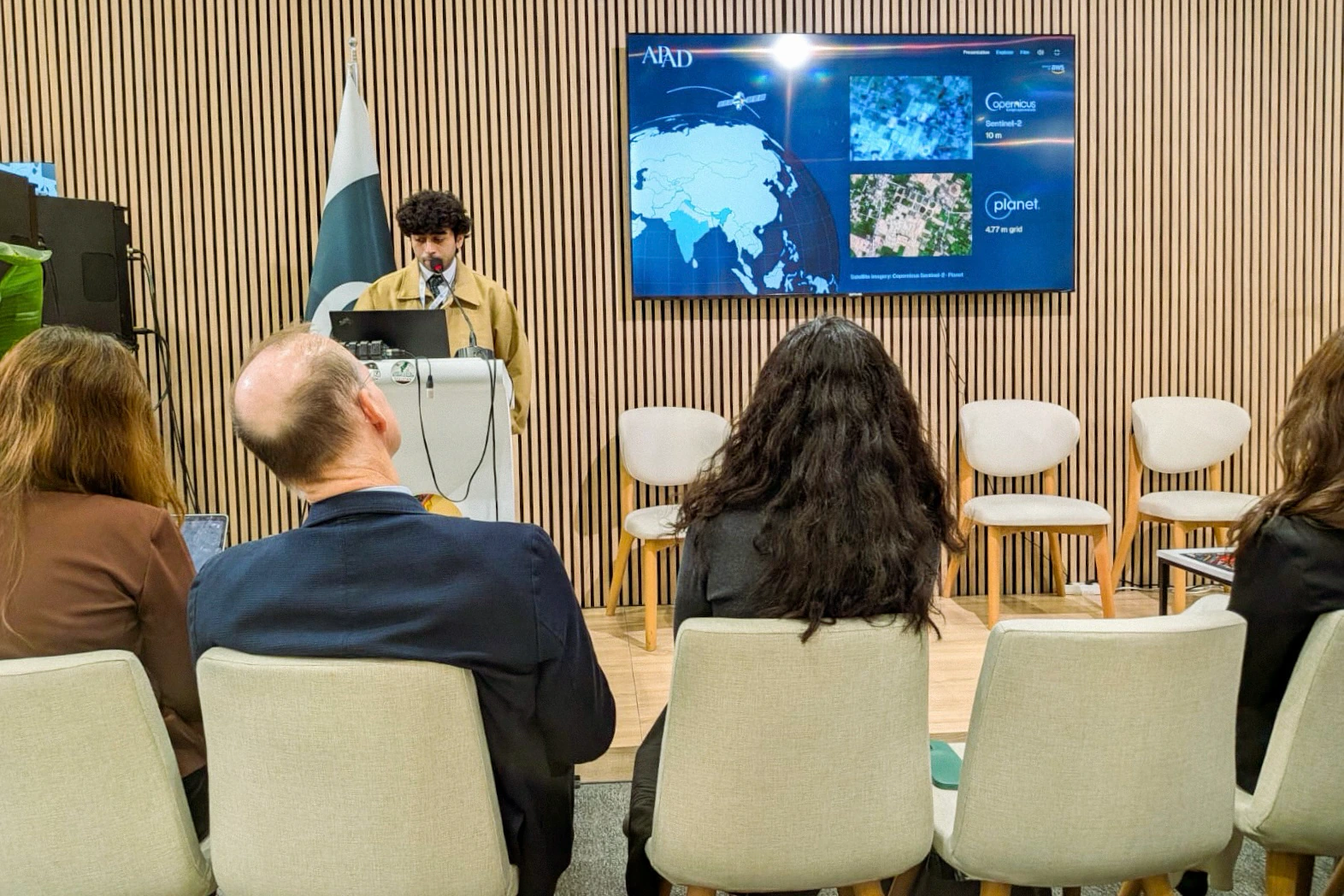
This was followed by a panel discussion with panelists from relevant disciplines. Across two weeks of COP31, air pollution barely made the agenda, and our panelists asked why and tried answering, “What next?”
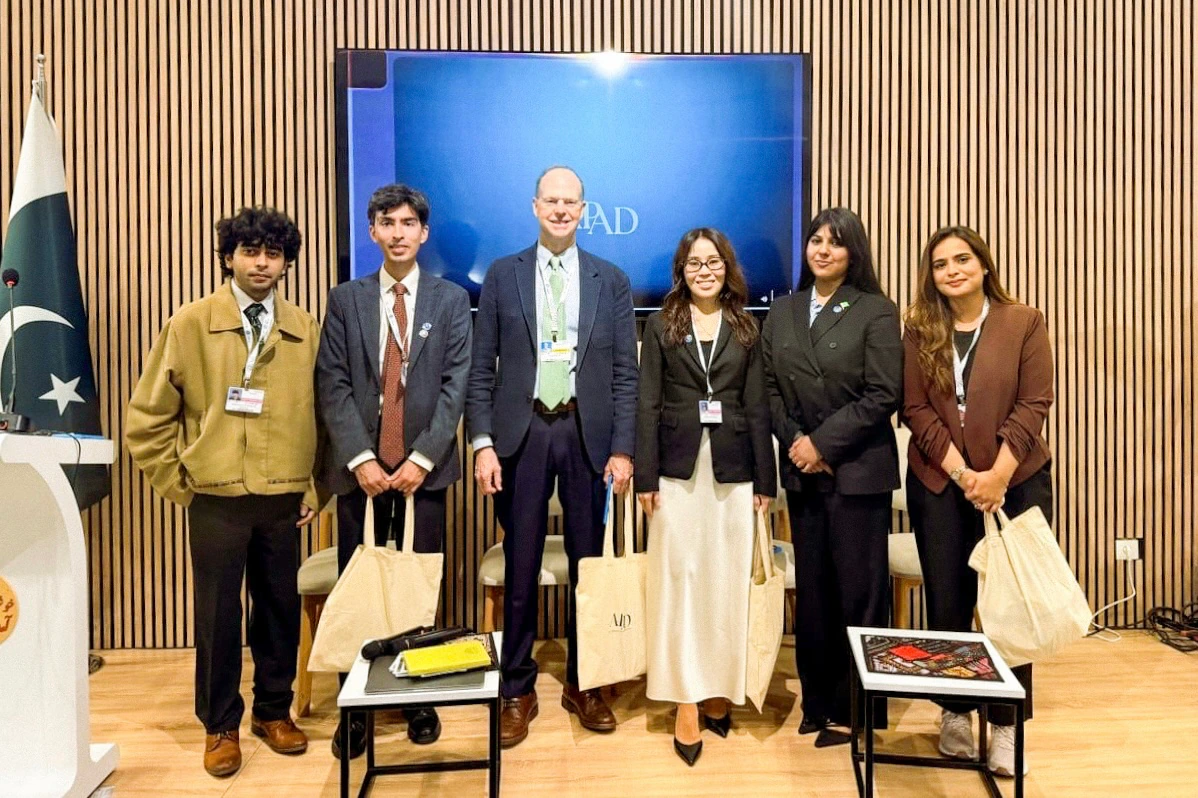
Our panel consisted of the following individuals:
- Dr Hassan Aftab is the founding director of APAD and a Research Fellow in Nature Finance at the Smith School of Enterprise and the Environment - University of Oxford. Hassan's research focuses on nature finance and investment, focusing on financing nature recovery. His other research interests include climate risk, air pollution, and net zero transitions across businesses and governments.
- Sidra Riaz is a Presidential Doctoral Fellow at Florida International University USA, Steven J. Green School of International and Public Affairs. She has served as a UN Women Delegate at CSW70 and a UN Youth Delegate to UN Climate Change Conferences, including COP29 in Azerbaijan and COP30 in Brazil, and she sits on the UNFCCC YOUNGO Youth Policy Team.
- Paul Simons is the Commissioner at Our Common Air and has been engaged in global energy and climate change policymaking for more than two decades. Since 2020, he has served as a Senior Fellow at Yale Jackson School of Global Affairs, teaching and mentoring students in the clean energy transition. He is also the founding director of the Yale Emerging Climate Leaders Fellowship, a new program to develop a network of leading clean energy and climate change practitioners from the Global South.
- Zhuldyz Saulebekova is a technology executive and CEO of Almaty Air Initiative, which is evolving into TAZA, a global clean air initiative. TAZA—meaning “clean” in Kazakh—combines science, technology, creative communication and policy engagement, with an ambition to help one billion people breathe cleaner air by 2040. Drawing on her experience scaling technology businesses, she developed a model for environmental action that can be adapted across countries.
- This discussion was moderated by Jaisha Mubashir, an architect and urban researcher working at the intersection of gender and urban transformation to develop frameworks for equitable cities. She handles partnerships and strategy at APAD.
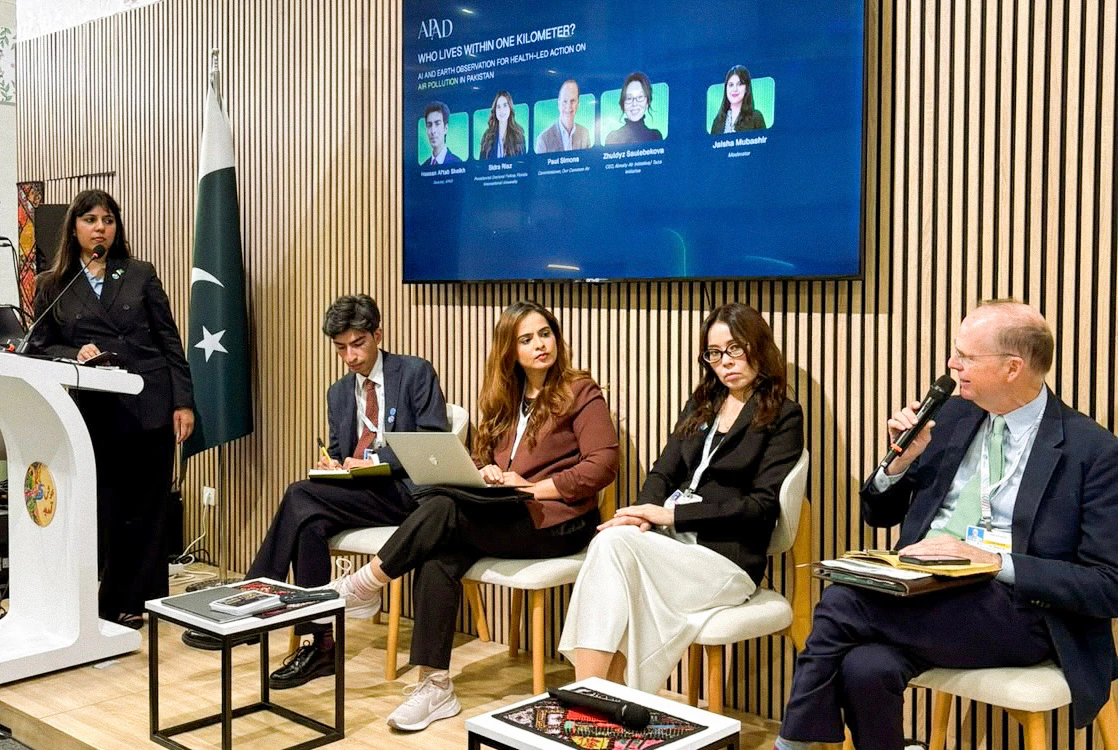
Ambassador Paul Simons, when asked about the gap between data and implementation, talked about the glaring lack of attention on the topic of clean air at a global conference like COP31 and about how clean air is an economic asset for the country, urging states to take implementation seriously. He suggested three major things: 1) Data collection from organizations like APAD must be reinforced, 2) Hotspots and small areas of most intense PM2.5 exposure must become the focus and, 3) The question of who is going to offset the costs must be asked.
Zhuldyz Saulebekova took Paul’s comment about exposure and emphasized the impact of air pollution exposure on the health of the present and future generations. She then clarified the difference between exposure and emissions, suggesting the inequality that lies within exposure itself and hence the health impact. She also touched upon the impact of policy and urban decisions, like the lack of buffer between a major bus stop and the population living next to it.
Sidra Riaz took the health impacts further and brought in the social layer of exposure. She talked about exposure depending on where an individual spends most of their time, as it varies heavily in an outdoor or indoor environment. She discussed how health is a priority at COP31 but there is not a lot of debate about the impact of air pollution. Lastly, she shared the on-ground experiences of women from her village in Pakistan, where lack of infrastructure still leaves them cooking over wood fires for hours and of the many children in the region whose schools sit right next to industries where they are forced to breathe in polluted air every day.
Dr Hassan Aftab then answered the question everyone wants an answer to: how can finance be used as a lever for air pollution mitigation, specifically for informal open waste burning sources? He mentioned that the evidence for municipal and corporate borrowing comes almost entirely from China, and sovereign evidence is thin. Therefore, changes in air quality rules can offer a natural experiment for testing it. He added that government procurement and standards can mobilize private capital to fill a gap.
When asked in the case where enforcement is weak, can concessional loans or subsidy conditions reward operators who move away from schools and hospitals? He added that it can be partly, and only where the operator has a repayment source and the condition can be verified. Finance can change an operator's cost of capital, but it cannot make a relocation happen where the operator has no reason to borrow or no revenue to repay.
The panel concluded with the panelists urging the COP leadership to put urgent emphasis on matters around clean air. The same fossil fuels that are heating the planet are the ones filling the air with pollutants in cities around the world. Clean air should not be a side event to climate action, as there is no healthy future for anyone without it.
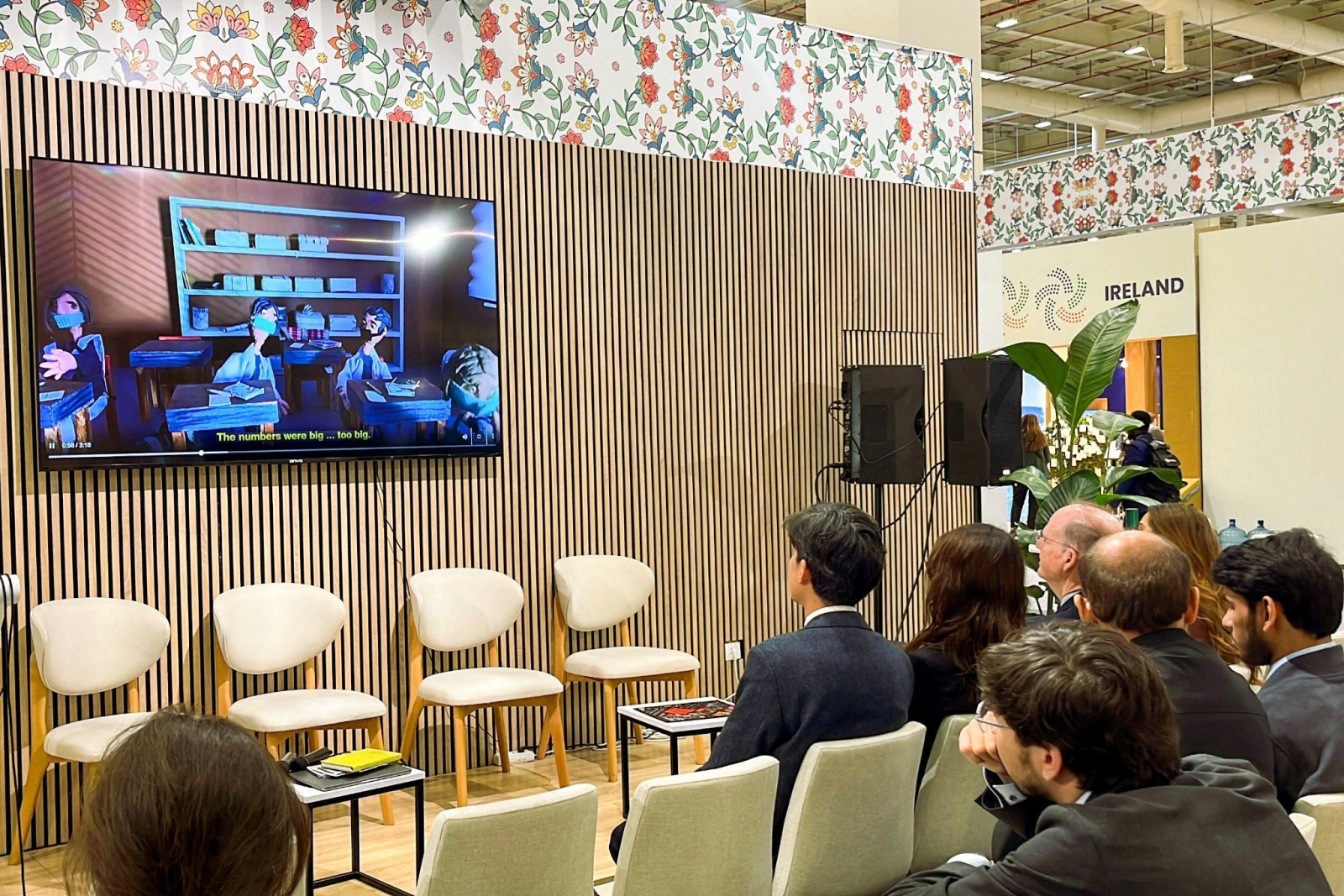
Afterwards, there was a screening of “Breathing in Classrooms,” a stop-motion film produced by APAD for World Health Day 2026. This film visualizes a dystopian future where children have to wear masks not just outside but also inside their classrooms. The story shown in the film is fictional but not too far from the truth. However, it is a future we still have the ability to change. This was written and directed by a Pakistani filmmaker, Fakhra Intizar.
With this we concluded our session. We want to extend our appreciation and thanks to our panelists and to the Pakistan Pavilion for hosting us.
APAD's mission is toward a healthy future where our children can breathe clean air!
Our datasets are open source; explore more at: https://apad.world/dashboard
For collaboration or inquiries, contact info@apad.world